Land Clearing in Powhatan & Goochland, VA
Need land cleared in Powhatan or Goochland County? Whether it's forestry mulching an overgrown field, clearing a lot for a house site, or grinding out stumps, here's what the job involves, what it costs, when the county wants a permit, and how to get a local contractor out to look at your property.
- One contractor per request, not a list
- No charge to landowners
- Owned by a Midlothian native
Serving Powhatan and Goochland Counties, from Flat Rock and Ballsville to Manakin-Sabot and Hadensville, plus Amelia, Cumberland, and western Chesterfield.
How it works
-
1
Tell us about the land
Where it is, roughly how big the area is, what's growing on it, and what you want it for. A house site, a pasture, a view, a fence line: it all changes the approach.
-
2
We connect you with a local contractor
We pass your request to one independent contractor who works in your part of the county and runs the right equipment for your job.
-
3
They walk the property
The contractor looks at the tree sizes, slopes, wet spots, access for equipment, and where the debris can go, then gives you their own written quote.
-
4
You decide
If you hire them, the contractor handles the contract, any permits, the work, payment, and cleanup directly with you.
There's no charge to you for the referral.
Land clearing services
Each one has its own guide, so you can read up before anyone shows up with a machine.
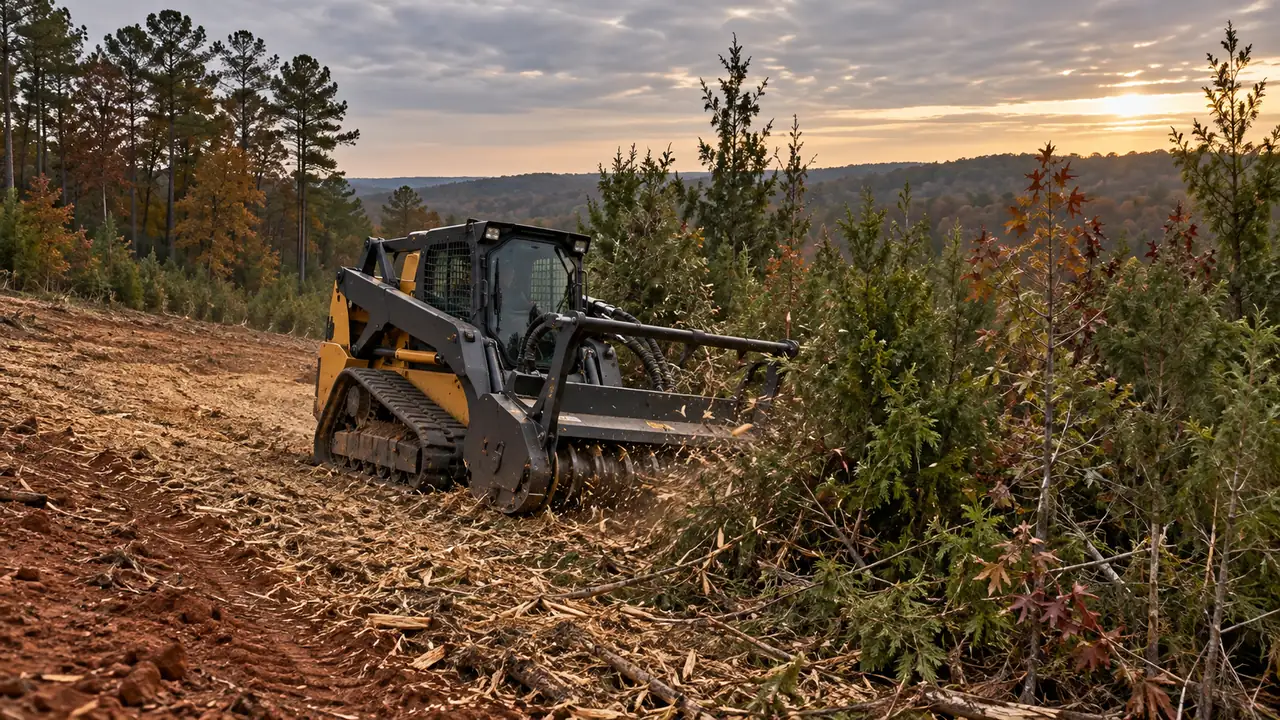
One machine grinds brush and small trees into a layer of mulch where they stand, with no piles to burn and no stumps pulled. The fastest way to open up overgrown acreage, cedar thickets, and old fields, as long as you don't need bare dirt.
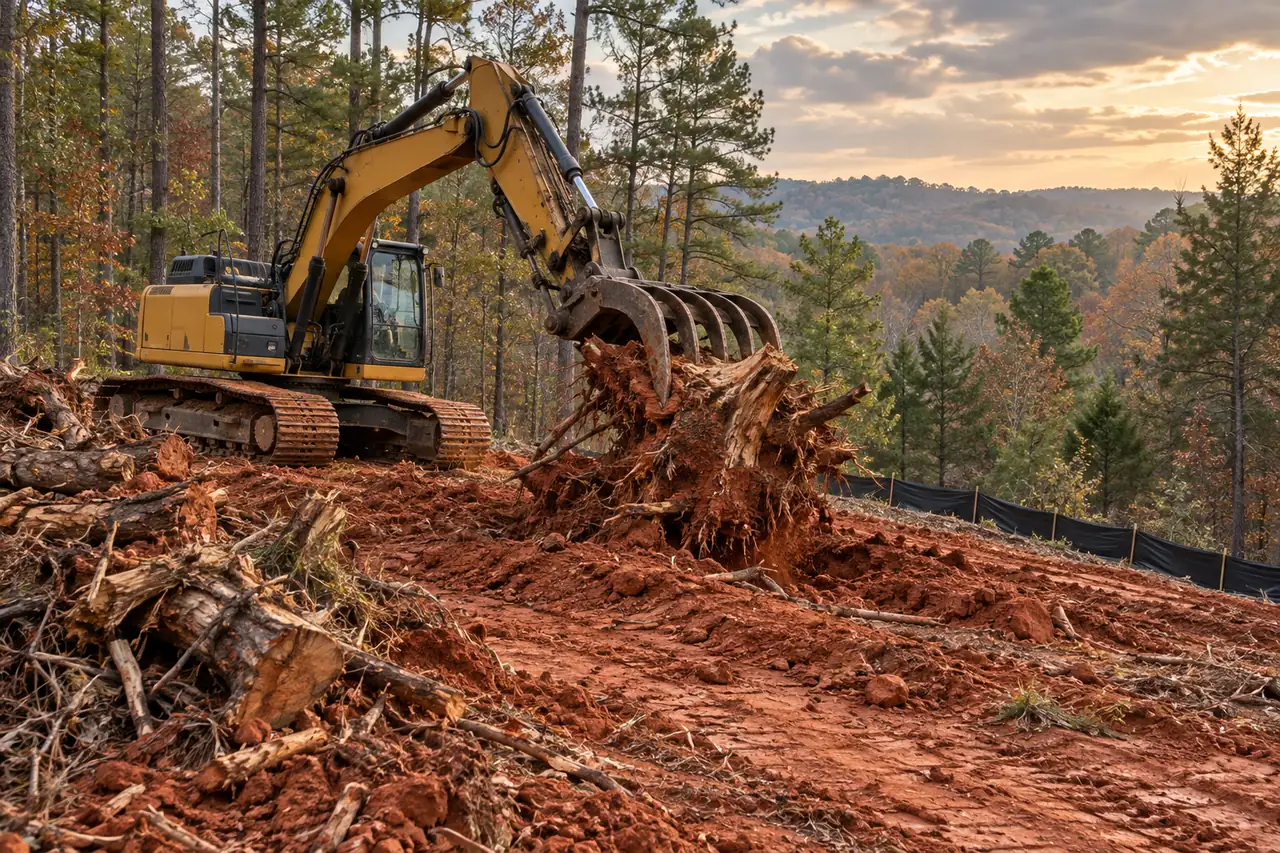
Clearing and grubbing a building site, driveway, and septic area so a foundation can go in. Stumps and roots come out, the ground gets graded, and the county's land disturbance permit usually comes into play.
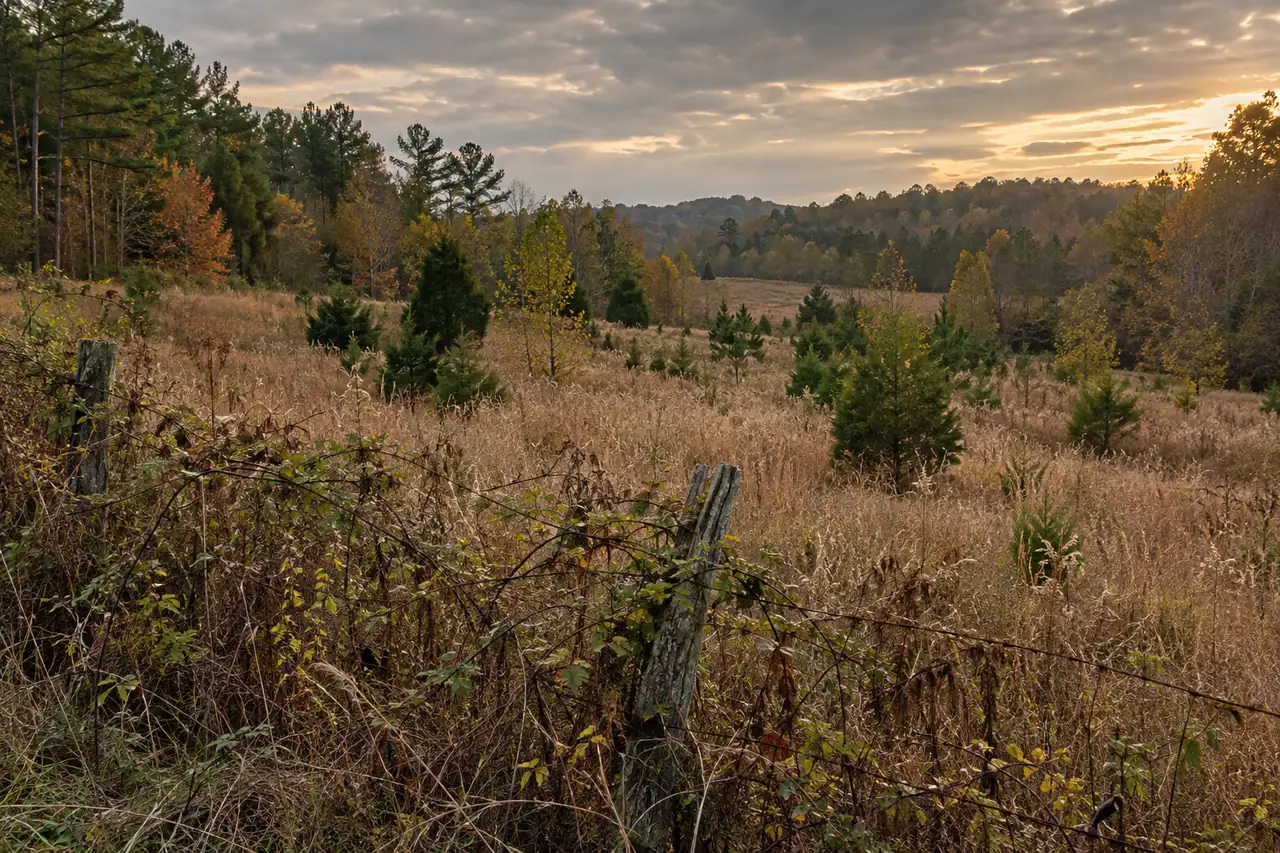
Taking back a pasture, field edge, or fence line that sweetgum, cedar, autumn olive, and multiflora rose have moved into, and planning for the regrowth that always follows.
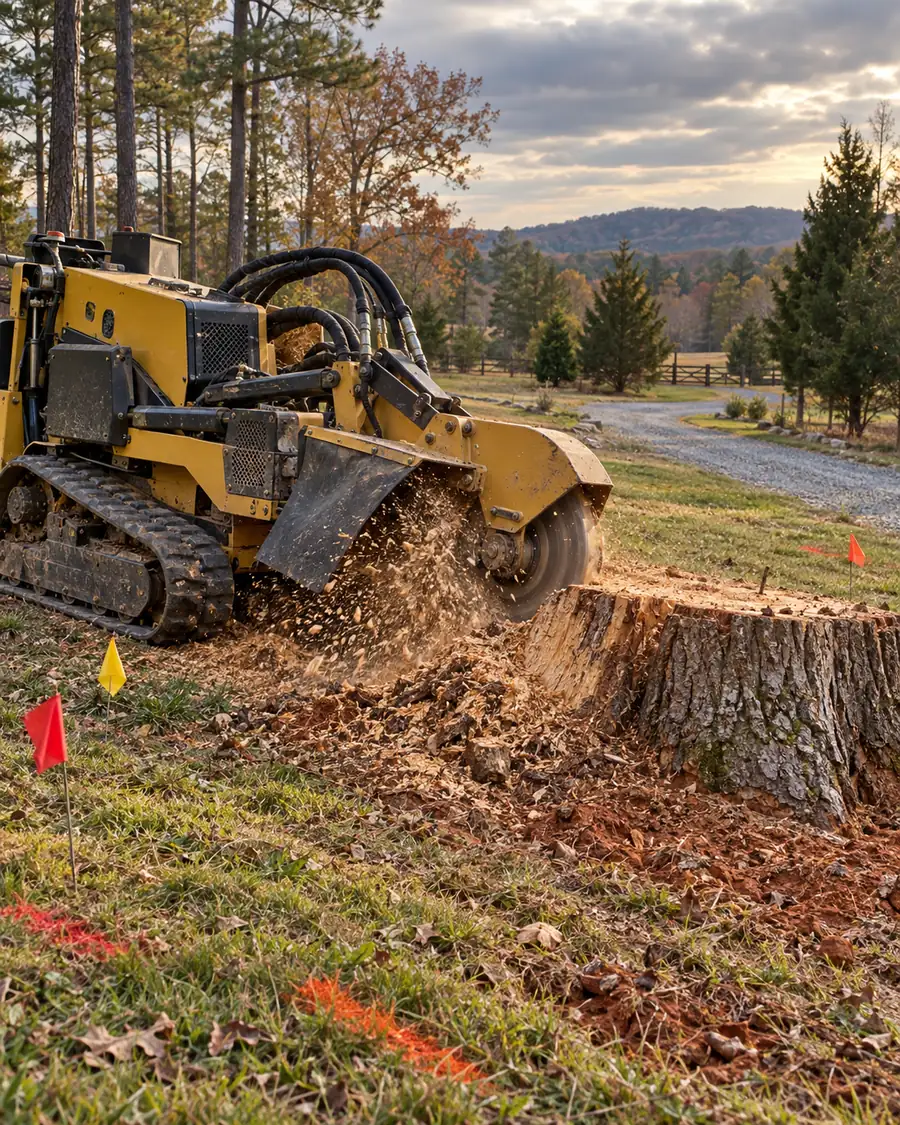
Grinding stumps below grade so you can mow over them, or digging them out entirely where something will be built. Either way, Virginia 811 gets called first.
Equipment you'll see on a clearing job
Which machines show up depends on the size of the job and what the land is for. These are the common ones.

Feller buncher
Cuts standing trees at the base and sets them down in bunches, which speeds up clearing on larger acreage.

Full-size excavator
Pulls stumps and roots, digs, and loads debris. It's the main machine for grubbing out a house site.

Mid-size excavator
Lighter and easier to haul than a full-size machine, for grubbing, ditching, and utility trenches on smaller sites.

Compact excavator
Small enough for tight lots and wooded edges, with a blade on the front for pushing dirt and backfilling.

Mini excavator
Small enough to work in a backyard, for pulling a stump or two and other small digs where a bigger machine won't fit.

Motor grader
Shapes and levels the ground to its final grade once clearing is done, especially for roads and driveways.
Mulching or traditional clearing?
Most land clearing jobs around Powhatan and Goochland come down to one of two approaches. The right one depends on what the land is for afterward.
Forestry mulching

- A mulching head on a skid steer or tracked machine chews brush and trees up to roughly 6 to 8 inches across into chips, in one pass.
- Stumps are cut near the ground and roots stay put, so the soil isn't torn up and there's little erosion.
- No burn piles, no hauling, no permit for burning. The mulch layer breaks down over a year or so.
- Best for opening up views, reclaiming pasture, trails, fence lines, and thinning woods.
- Not enough on its own where a foundation, driveway base, or septic drainfield is going. Hardwood stumps will sprout unless they're treated.
Traditional clearing and grubbing

- Trees are cut (larger timber may be sold first), then an excavator or dozer pushes out the stumps and roots and grades the ground.
- Leaves bare, workable dirt, which is what a house site, a driveway, or a pond needs.
- Debris has to go somewhere: burned on site under a county permit, ground up, or hauled away. That's often the biggest part of the bill.
- Disturbs the soil, so the county's 10,000 square foot land disturbance rules come into play sooner, and erosion controls like silt fence are part of the job.
- Best for building sites, driveways, ponds, and anywhere the stumps truly have to be gone.
Plenty of jobs use both: mulch the acreage, then grub out only the footprint of the house, drive, and drainfield. A good contractor will say which parts of your property need which.
What drives the cost
Land clearing is priced by the acre, by the day, or by the hour, and the number depends far more on what's on the land than on how much land there is. Two one-acre lots in Powhatan can get quotes that differ by thousands of dollars.
National cost guides put lightly wooded clearing at roughly $500 to $2,500 per acre and dense, mature woods at $3,600 to $8,000 per acre, with forestry mulching typically well under traditional clearing. Those are national figures, not Powhatan or Goochland quotes. The written quote from a contractor who has walked your property is the number that counts.
Read the full cost guide Request a quote for your propertyWhat sets the price
- Tree size and density
- Brush and saplings go fast; mature hardwoods and big pines don't
- Mulch or grub
- Leaving stumps and roots in place is much cheaper than pulling them
- Debris
- Burn on site, grind, bury, or haul; hauling costs the most
- Stumps
- Count, diameter, and whether they're ground or dug out
- Ground conditions
- Slopes, rock, wet spots, and creek buffers slow equipment down
- Access
- Can a trailer get a machine to the work, or does a road have to be cut first?
- Grading and seeding
- Rough grading, topsoil, and seed or straw after the clearing
- Permits and erosion control
- Silt fence, a stone construction entrance, and county fees once you cross 10,000 square feet
- Timber value
- Merchantable pine or hardwood can offset part of the cost, or not, depending on volume
Do you need a permit to clear land in Powhatan or Goochland?
Sometimes. Both counties draw the line at 10,000 square feet of land disturbance, which is a little under a quarter acre, and both have their own rules about burning the debris. The short version:
Land disturbance
Clearing, grading, or grubbing 10,000 square feet or more needs a land disturbance permit from the county. Single-family home sites under an acre can usually use a simpler agreement in lieu of a plan. At an acre or more, state stormwater coverage from DEQ is added on top.
Burning debris
Powhatan requires a burn permit for piles bigger than 8 by 8 by 4 feet. Goochland requires one for all land-clearing burns and a call to the Sheriff's non-emergency line before each one. From February 15 through April 30, Virginia's 4 PM law limits burning near woods to 4 PM to midnight.
Wet ground and streams
Pushing stumps or grading in a wetland or stream needs federal and state permits, and Goochland's 10,000 square foot exemption doesn't apply in floodplains, wetlands, or steep slopes. If part of your land stays wet, say so when you ask for quotes.
Areas we serve
Land clearing referrals across Powhatan and Goochland Counties, from a site owned and managed by a Midlothian native who grew up next door. Don't see your area? Call anyway and we'll check whether a contractor covers your property.

Powhatan County
- Powhatan
- Flat Rock
- Macon
- Ballsville
- Tobaccoville
- Jefferson
- Moseley
Goochland County
- Goochland
- Manakin-Sabot
- Crozier
- Oilville
- Sandy Hook
- Hadensville
- Maidens
- Gum Spring
Nearby
- Amelia County
- Cumberland County
- Western Chesterfield
Common questions
How much does it cost to clear an acre in Powhatan?
It depends on what's growing on it and whether the stumps have to come out. National guides range from a few hundred dollars an acre for light brush to several thousand for dense, mature woods with grubbing and hauling. Forestry mulching usually lands toward the lower end. The cost guide walks through the factors; a contractor's quote after walking the land is the real number.
Is forestry mulching enough for a house site?
Not by itself. Mulching leaves stumps and roots in the ground, and those rot and settle, which you don't want under a foundation, a driveway base, or a septic drainfield. The usual approach is to mulch the acreage and grub out just the footprint that gets built on.
Do I need a permit?
In both Powhatan and Goochland, a land disturbance permit kicks in at 10,000 square feet of disturbed ground. Mulching that leaves roots in place is a gray area with no official state rule, so it's worth a call to the county's environmental office before a big job. Burning the debris has its own permit in both counties. Permits and burning rules has the details and the phone numbers.
Will the brush grow back?
Some of it, yes. Red maple, sweetgum, and black locust sprout from cut stumps and roots, and tree-of-heaven and autumn olive come back from the roots unless they're treated. Plan on bush-hogging or a herbicide follow-up in the first year or two, and ask the contractor what they recommend for your land. More on regrowth.
Can I sell the timber first?
If there's enough merchantable pine or hardwood, a logger may buy it, which can offset the clearing cost. Small lots and scattered trees usually aren't worth a logger's move-in. The Virginia Department of Forestry publishes guidance on selling timber and advises never using a verbal agreement. A commercial harvest also has to be reported to the State Forester by the logger.
How long does clearing take?
A mulching machine can cover anywhere from a fraction of an acre to several acres a day depending on how thick the growth is. Traditional clearing with grubbing, burning, and grading takes longer, and burn piles may need days to finish. Your contractor should give you a timeline with the quote.
What should I protect before equipment shows up?
Your future septic drainfield and its reserve area, your well, any trees you want to keep, property lines, and anything buried. Flag or fence them, and have Virginia 811 mark utilities before stumps are ground or pulled. The lot clearing guide has a checklist.
Who actually does the work?
An independent contractor, not us. LandClearingPowhatan.com is a referral service. The contractor gives the quote, signs the contract, and handles the work, permits, and cleanup. Who clears land explains which licenses apply and how to check one.
Ready to have someone walk the property?
Call or send a short request. There's no charge for the referral.